
The first quarter of 2026 saw increased geopolitical tensions with the conflict in the Middle East contributing to heightened market volatility. There were 17 days where the market lost at least 0.50%, 18 days where the market gained at least 0.50%, and only 25 days where the market returned between -0.50% and +0.50%. Since we tend to feel losses stronger than gains1, it’s possible investors thought the market performed much more poorly in the first quarter than it actually did. The market was down just 4.33% for Q1 and by April 9th after the two-week ceasefire was announced the market actually returned to positive territory for the year.2
Impact of the Energy Crisis
The closing of the Strait or Hormuz, where 25% of the global oil supply travels through, led to a sudden decrease in supply and increase in price for oil.3 Brent crude oil prices per barrel went from $61.35 to $121.88 throughout the quarter.4 That almost doubling of the price of oil had a large and varied impact. For the US energy sector as a whole, it buoyed stock prices, resulting in a 37.65% return for the sector. But given that oil is an input to many products and other chemicals and minerals that normally pass through the Strait were similarly effected, inflation expectations picked up as the 2-year treasury bond went from 3.47% to 3.79% throughout the quarter. Even the Federal Reserve, who had been signaling a reduction in rates prior to the conflict has now moved to the sideline claiming “the implications of developments in the Middle East for the U.S. economy are uncertain” and appears to be in no hurry to resume cutting interest rates.5
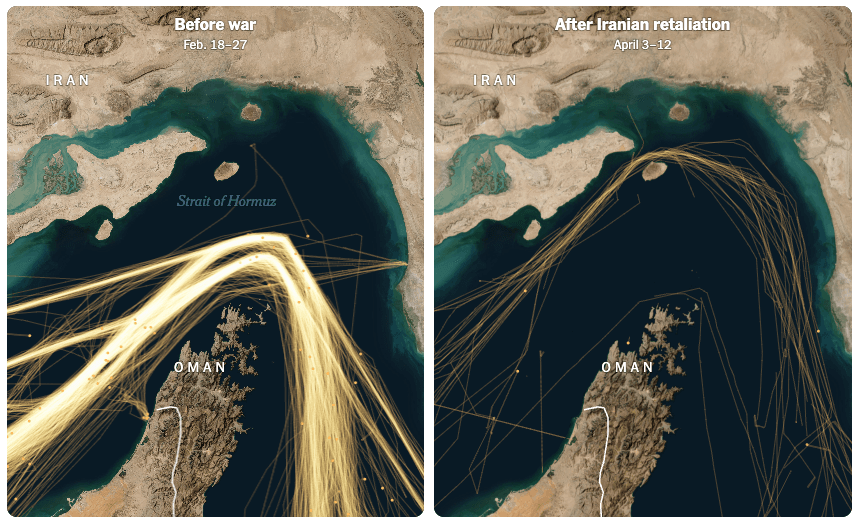
Image Source: New York Times6
AI Cannibalizes the Software Industry
The AI boom has seen many winners from chip makers and data centers to the mega cap tech companies that have invested heavily in expanding their capabilities to be at the forefront of the AI arms race. The narrative changed in a big way during Q1 where software companies were hit hard due to the perception that competition would become more fierce from new entrants who could use AI to develop code at much lower costs.7 While there could be some truth to this, it also overlooks the value that software companies add from a design and service perspective. If anything, these are the very companies that are best suited for using AI to improve their products and reduce their costs. Well-known companies like Microsoft, Oracle, and Salesforce all lost between 20% and 30% and the software industry as a whole lost 24.26%. Time will tell if this narrative plays out or if this represents an opportunity for buy-the-dip investors.
Risks Remain But Market Sentiment Remains Strong
We view Q1 as a “shock” and not a “shift”. The conflict in the Middle East caught many by surprise and its path toward a resolution is still unclear. But, investors have had some time now to process its potential impact. Perhaps investors are starting to look past the conflict and ahead to longer-term trends like AI and space exploration (as SpaceX applies for an Initial Public Offering and Artemis II had a successful mission around the moon). Remaining diversified is the best way to move forward despite the uncertainty.
Sources & Disclosures
1. https://en.wikipedia.org/wiki/Prospect_theory
2. Data from Kwanti.com based on the S&P 500 Total Return index
3. https://www.britannica.com/topic/How-Much-Oil-Passes-Through-the-Strait-of-Hormuz
4. https://fred.stlouisfed.org/series/DCOILBRENTEU
5. https://www.federalreserve.gov/newsevents/pressreleases/monetary20260318a.htm
6. The Slow-Motion Battle for Hormuz (New York Times) https://www.nytimes.com/interactive/2026/04/16/world/middleeast/iran-us-strait-of-hormuz-blockade-map-ships.html
7. https://www.mauldineconomics.com/frontlinethoughts/ai-and-creative-destruction